

Knee Surgery Alternative At Mountain View Headache and Spine Institute
Knee Surgery Alternative
Procedures using Regenexx injectates may provide a non-surgical option for individuals experiencing knee pain related to arthritis or injury.
At Mountain View Headache and Spine Institute in Phoenix, Arizona, physicians in the licensed Regenexx network perform customized treatments designed to support the body’s natural healing process. Regenexx platelet-rich plasma (PRP) and bone marrow concentrate (BMC) injectates are used to address common orthopedic conditions such as meniscus injuries, ACL strains or tears, and knee osteoarthritis. These procedures use the individual’s own healing agents and aim to help reduce pain and may improve mobility, potentially helping patients avoid or delay the need for knee surgery.
To determine whether this approach may be appropriate for a condition, a physician in Phoenix, Arizonawill assess medical history, imaging, and treatment goals.
Are You a Regenexx Candidate?- Knee
- Meniscus
- Osteoarthritis
- ACL
The Regenexx® Alternative to Knee Surgery and Knee Replacement Surgery
The Knee Owner’s Manual
How to Avoid Game Changing, Invasive Knee Surgeries and Stay Active as You Age
For individuals experiencing knee pain, interventional orthobiologic approaches may offer a non-surgical option compared to steroid knee injections or more invasive procedures. These techniques use healing agents derived from the body to support tissue health and may help ease discomfort related to knee injuries or arthritis.
Recent evidence indicates that some commonly performed orthopedic knee surgeries, such as meniscectomies, may not yield better outcomes than placebo or sham procedures. Knee replacement is a major operation with associated risks, and the recovery process typically requires several months of rehabilitation. In some situations, surgery may contribute to additional joint changes, including the potential for accelerated degeneration or osteoarthritis.
The Regenexx approach is designed to support individuals with knee injuries or degenerative conditions. This method, called Interventional Orthopedics, uses image guidance (fluoroscopy and ultrasound) to deliver customized concentrations of a person’s own healing agents directly into specific joint structures. Precise placement is designed to support the body’s natural healing processes.
Procedures using Regenexx injectates may help improve knee function and reduce discomfort without requiring surgery. In this outpatient process, licensed physicians use image guidance to inject customized concentrations of biologic material into areas of identified damage to help support and stabilize the knee. This technique requires specialized training and adherence to defined protocols, and cannot be duplicated by providers who are not certified in the Regenexx system.
Get back to the activities you enjoy without knee surgery
Imagine walking, keeping up with family or pets, when the knee suddenly catches and gives out. This can result in a fall, intense knee pain, and difficulty bearing weight on the leg. This pattern of the knee locking or giving way can occur over months.
Hesitation to seek care, due to uncertainty about surgery or knee replacement, is a common concern. Physicians in the licensed Regenexx network at Mountain View Headache and Spine Institute may help individuals better understand their condition and explore appropriate next steps.
Common Factors That Can Lead to Knee Pain
Knee discomfort can arise from a variety of conditions, including:
- Bone fractures or dislocations affecting the knee
- Injuries to knee ligaments
- Cartilage damage, such as meniscus tears
- Inflammation of the bursae (bursitis)
- Tendon irritation or tears
- General knee pain linked to issues like improper footwear, iliotibial band syndrome, or hip alignment problems
- Degenerative changes, including osteoarthritis
Before exploring these causes further, it may help to understand the basic structure and function of the knee joint.
Understanding Knee Anatomy
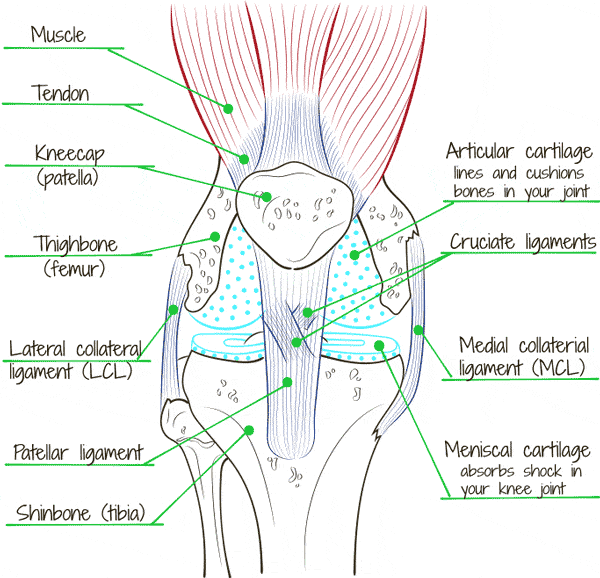
The knee acts primarily as a hinge joint, allowing bending and straightening while permitting slight rotational movement. It connects the femur (thigh bone) to the tibia (shin bone) and is protected in the front by the patella, or kneecap.
The knee can fully straighten to 0 degrees and bend approximately 135 degrees. Unlike ball-and-socket joints like the hip and shoulder, which allow motion in multiple planes, the knee is more limited, making it vulnerable to injuries from twisting or lateral forces. Additional factors like muscle imbalances, worn or poorly fitting shoes, and elevated body weight can also place extra stress on the joint.
Being a weight-bearing joint, the knee absorbs forces generated during activities such as walking, running, or jumping. Running produces higher impact forces compared to walking, and increased body weight can further amplify stress on the joint. Over time, repeated stress may lead to cartilage changes, inflammation, or structural wear—conditions often classified as osteoarthritis or degenerative joint disease.
Knee pain may therefore result from a sudden injury or from cumulative stress that has not been addressed through proper care and rehabilitation.
Key Components of the Knee
The knee is composed of bones, cartilage, ligaments, tendons, and fluid-filled sacs that work together to allow movement and absorb impact during activities like walking, squatting, or jumping.
- Bones: The femur, tibia, and patella form the knee joint. The ends of the femur and tibia, called condyles, meet to enable smooth motion. The medial condyle is located on the inner side of the knee, and the lateral condyle on the outer side.
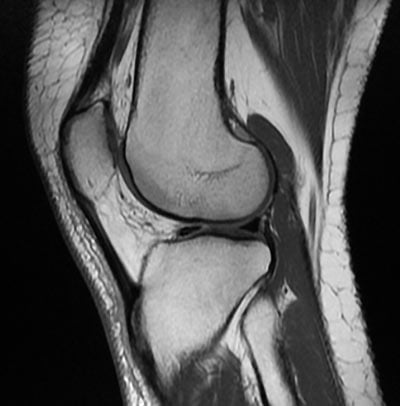
- Cartilage: The meniscus is a crescent-shaped cartilage between the femur and tibia that cushions the joint, distributes weight, absorbs shock, and helps protect the smooth cartilage surfaces. Each knee contains a medial and lateral meniscus. Osteoarthritis may develop when cartilage at the ends of the bones wears down over time.
- Bursa Sacs: These fluid-filled sacs cushion pressure points between bones and tendons, reducing friction and protecting the joint during movement.
- Ligaments: Ligaments are tough connective tissues that stabilize the knee. Major ligaments include the anterior cruciate ligament (ACL) and posterior cruciate ligament (PCL), which maintain alignment between the femur and tibia while supporting stability.
- Tendons: Tendons connect muscles to bones. The quadriceps tendon attaches the quadriceps muscle to the patella, and the patellar tendon links the patella to the tibia. These structures, together with surrounding muscles, allow the knee to move and bear weight efficiently.
Treatment Options for Knee Pain from Injury or Arthritis
What can be done to reduce knee pain from injury?
In order to reduce knee pain, the cause of pain must be identified. The knee has many parts that keep it protected, stable, and mobile. Any one of these can be the cause of pain. In addition, pain can originate outside of the knee joint but still be felt in the knee, as in the case of iliotibial band (ITB) syndrome or poorly fitting or worn-out shoes.
Some knee conditions require rest and/or special exercises prescribed by a physical therapist. Yet, some require advanced medical attention simply because the pain is not being reduced or the function is not improving. Research has shown that many of the most common surgeries, such as a “knee clean up,” may be ineffective for some individuals and could result in outcomes that do not meet expectations. Physicians in the licensed Regenexx network, including those at Mountain View Headache and Spine Institute in Phoenix, Arizona, are trained in evaluating and addressing knee issues with non-surgical interventional orthobiologic options. However, in some severe cases, surgery may be the most appropriate solution.
What does arthritis pain in the knee feel like?
Arthritis literally means inflammation of a joint. Osteoarthritis is a specific type of arthritis, most frequently referred to as degenerative joint disease. While it can affect any joint, it most commonly damages knees, hands, hips, and spine.
Knee arthritis symptoms develop slowly and can worsen as time goes on. The chances of developing arthritis increases after 45 years of age; however, it can affect anyone at any age. Arthritis symptoms in the knee include swelling and stiffness, as well as pain. There may be associated cracking noises as well. With knee arthritis, the pain may feel like weakness or “buckling” of the knee. In addition, loose fragments in the joint from cartilage or other tissues can cause the knee to lock during movement. Both buckling and locking of the knee may increase the likelihood of falls or further joint stress.
Pain and swelling in the knee can be worse in the mornings or after sitting for long periods of time, and pain may increase during rainy or humid weather.
What can be done to reduce arthritis pain in the knee?
Reducing arthritis pain in the knee is not dissimilar from managing an acute injury; however, consider how much time this chronic condition has been present.
Arthritis in the knee is caused by constant, uneven, undue wear in the knee without the proper environment or space for healing.
There are pharmaceuticals to help mask the pain symptoms so that individuals can continue with daily life; however, those are associated with potential side effects that can contribute to or worsen other medical conditions. An alternative approach would be to address the uneven, undue wear and provide the environment necessary for the body to maximize its own ability to heal. While it does take time, it often does not take as long as it took for the chronic damage to develop.
The Regenexx approach—available at Mountain View Headache and Spine Institute in Phoenix, Arizona—may be able to help.
Ultimately, surgery may be an option for knee arthritis pain relief, in the form of joint replacement. But surgically removing the knee joint should not be the first treatment considered. This is a serious, life-altering surgery that may be avoidable for some individuals through the Regenexx approach, which includes procedures using Regenexx injectates that are designed to support the body’s natural healing response.
How to promote knee joint health?
The human body has natural repair mechanisms that are constantly at work. A simple example is when a cut occurs on a finger, it may bleed, a scab forms, and under that, healing cells are sent to seal and repair the tissue.
Similarly, the body engages in ongoing maintenance to support function and recovery. These processes may not be visible, but they play a role in tissue repair throughout the body, including the knee joint.
Several lifestyle factors within an individual’s control may influence the body’s ability to recover from damage and maintain joint health. These include:
- Whether or not the individual smokes
- The amount of alcohol consumed
- Quality and quantity of sleep
- Frequency and intensity of physical activity
- Nutrition and digestive function, which affect how nutrients reach the body’s cells
- How the body responds to stress
These lifestyle factors can influence how well the body recovers from acute injuries and long-term changes, such as those that contribute to knee arthritis.
Even when these conditions are optimized, such as avoiding smoking and excessive alcohol, maintaining good sleep habits, staying physically active, and eating a nutrient-rich diet, there may still be instances when the body benefits from additional support.
That is where the Regenexx approach, available at Mountain View Headache and Spine Institute in Phoenix, may offer help.
What is interventional orthobiologics? How can this approach help manage knee pain?
Many typical medical treatments rely on medications that mask pain without addressing the underlying issue. In some cases, surgical options are pursued that may not result in meaningful long-term improvements in function or pain.
Surgical procedures can be physically demanding and involve significant recovery time. Healing from such interventions, particularly joint reconstruction, can require months or more of rehabilitation to regain range of motion, strength, and balance. In some cases, the joint may not return to optimal function.
Joint replacement introduces foreign materials into the body. The immune system may recognize these materials as non-native, triggering inflammation and discomfort as a biological response. While surgery may be appropriate in certain severe cases, it is a significant step and not always necessary as an initial treatment.
The treatment protocols may help the body’s natural repair mechanisms by directing customized concentrated cellular elements to the site of joint damage. This process does not involve synthetic materials or pharmaceuticals but instead uses the individual’s own biological material, prepared using Regenexx processing, and precisely applies it to the affected area.
This field is referred to as interventional orthobiologics. Procedures using Regenexx injectates may support improved joint function, mobility, and may help reduce pain, while potentially helping individuals avoid surgery.
Physicians in the licensed Regenexx network, including those at Mountain View Headache and Spine Institute, are among the most experienced in using this non-surgical approach to orthopedic care.
Complete the Regenexx Candidate Form to learn if this approach may be appropriate for a specific condition.
Find a Location
Find a physician in licensed Regenexx network.
Regenexx Benefits
- Increased function
- Pain reduction
- Most individuals do not experience extensive downtime
- Minimal time off of work
- No surgery
- Minimal use of mobility tools (crutches, etc.)
- Minimal disruption of regular routine
4729 East Union Hills Drive
Suite 111
Phoenix, AZ 85050
Request an Appointment
Call to Schedule Schedule OnlineClinic Hours
| Sunday | Closed |
| Monday | 8AM–4PM |
| Tuesday | 8AM–4PM |
| Wednesday | 8AM–4PM |
| Thursday | 8AM–4PM |
| Friday | 8AM–4PM |
| Saturday | Closed |