

Rotator Cuff Tear Guide From Pain Doctors Medical
Rotator cuff tears occur when the tendons in the shoulder become damaged due to overuse, injury, or age-related degeneration. This condition often results in discomfort, reduced strength, and limited range of motion, making daily activities more difficult.
While many individuals turn to medications for symptom relief, a 2024 study suggests that shoulder injuries are frequently linked to increased opioid use. However, medication may only mask symptoms without addressing the underlying tendon damage and, in some cases, may contribute to the progression of the condition, potentially increasing the likelihood of surgery.
Procedures using Regenexx processing harness interventional orthobiologics to support the body’s natural healing response. This approach offers a less invasive alternative to shoulder surgery, which may help reduce discomfort and may minimize the need for long-term prescription medications.
Understanding The Anatomy Of The Shoulder
The shoulder is one of the body’s most complex and mobile joints, allowing a wide range of motion necessary for daily activities such as lifting, reaching, and pushing.
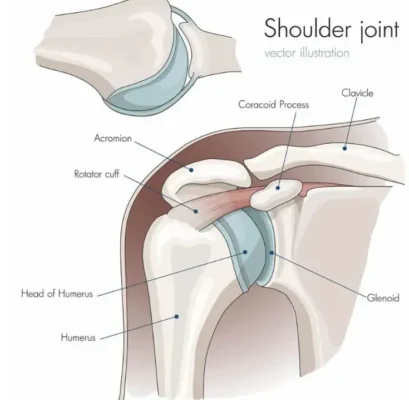
Key Structures
The shoulder is a highly flexible joint system composed of bones, joints, muscles, and connective tissues that work together to support a wide range of movement.
- Bones: Three major bones form the shoulder: the Humerus (upper arm bone), the Scapula (shoulder blade), and the Clavicle (collarbone).
- Joints: The shoulder includes four joints that enable its wide range of motion:
- Glenohumeral Joint: This ball-and-socket joint connects the humerus and scapula, allowing movements like arm rotation and overhead reaching.
- Acromioclavicular (AC) Joint: This joint links the clavicle with the scapula and may help stabilize the shoulder during movement.
- Scapulothoracic Joint: Located where the scapula glides over the rib cage, this joint plays a vital role in shoulder elevation and smooth motion.
- Sternoclavicular Joint: The connection between the clavicle and sternum may support upper body movement and shoulder stability.
- Muscles and Tendons: The shoulder’s range of motion and strength are supported by surrounding muscles, tendons, and ligaments. These soft tissues may help keep the shoulder joint stable, aligned, and protected from injury. Tendons connect muscles to bones, making them essential for shoulder function and control.
What Is A Torn Rotator Cuff?
The rotator cuff is composed of four muscles and their associated tendons that collectively stabilize the shoulder’s ball-and-socket joint. This group of soft tissues keeps the upper arm bone (humerus) properly positioned within the glenoid cavity of the scapula, allowing for smooth and controlled arm movements.
Beyond joint stabilization, the rotator cuff plays a critical role in:
- Raising the arm
- Rotating the arm inward and outward
- Supporting shoulder stability during dynamic and repetitive movements
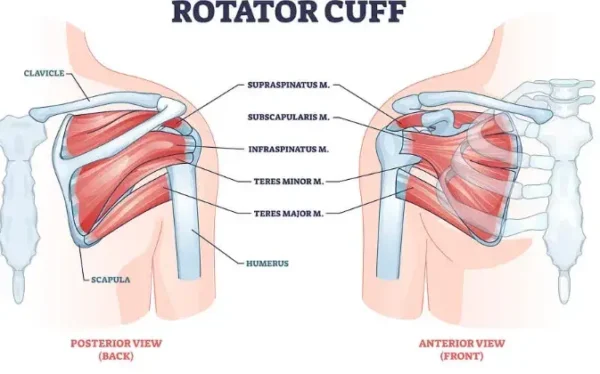
The rotator cuff is made up of four essential muscles and their tendons:
- Supraspinatus: Positioned at the top of the shoulder, it assists in raising the arm sideways (abduction).
- Infraspinatus: Located on the back of the shoulder, it plays a role in rotating the arm outward.
- Teres Minor: A small muscle beneath the infraspinatus that also contributes to external rotation of the arm.
- Subscapularis: Found on the front side of the shoulder, this muscle is responsible for rotating the arm inward.
Types of Rotator Cuff Tears
Rotator cuff tears occur when the tendons linking these muscles to the shoulder bones become damaged or worn down. This may be due to repetitive use, trauma, or aging, and it typically leads to reduced shoulder movement and strength.
Rotator cuff tears are classified based on the degree of tendon damage:
- Partial-thickness (incomplete) tear: This occurs when the tendon is partially torn but not completely severed. Only part of the tendon’s thickness is affected, and it remains attached to the bone. Patients may experience pain and reduced shoulder mobility, although some normal function may still be preserved.
- Full-thickness (complete) tear: This type involves a complete tear through the tendon, fully detaching it from the bone. It usually causes substantial pain, weakness, and a marked loss of shoulder function. Daily movements may become extremely difficult or impossible, often necessitating medical or surgical treatment.
If left unaddressed, full-thickness tears can result in long-term issues such as muscle wasting (atrophy) and degeneration of the shoulder joint.
Who Is At Risk Of A Torn Rotator Cuff?
While rotator cuff tears can affect anyone, several risk factors may increase the chances of developing one:
- Poor posture: Maintaining rounded shoulders or slouching places additional stress on the rotator cuff, potentially leading to muscle imbalances and uneven joint wear. A 2015 study found that approximately 56% of individuals with poor posture experienced rotator cuff tears, compared to just 2.9% among those with proper posture.
- Genetic predisposition: A family history of rotator cuff injuries may indicate a genetic tendency toward tendon weakness or degeneration. A 2017 systematic review found that roughly one-third of patients with rotator cuff tears had relatives with a similar history.
- Age over 40: As people age, shoulder tendons naturally lose strength and flexibility, making them more prone to tearing.
- Repetitive overhead activity: Individuals whose daily activities or sports frequently involve using their arms in overhead motions, such as swimmers, baseball players, painters, or carpenters, are at higher risk due to ongoing strain.
Research indicates that women may face a higher likelihood of rotator cuff injuries than men, possibly due to greater joint flexibility and a higher incidence of osteoarthritis. In one study of 1,003 women aged 64 to 87, 22% were found to have rotator cuff tears, with rates rising with age and more often affecting the dominant shoulder.
Causes Of A Torn Rotator Cuff
Rotator cuff tears are generally classified into two main types:
- Acute tears: These happen suddenly, often triggered by a traumatic event such as a fall, a direct blow to the shoulder, or lifting an object that is too heavy.
- Degenerative tears: These occur gradually over time as a result of ongoing wear and tear. They are commonly associated with aging or repetitive motions that gradually weaken and fray the tendons.
Repetitive Overhead Motion
Activities involving frequent overhead arm use, such as in sports like swimming or baseball, or daily activities like painting, can place repeated stress on the shoulder. Over time, this strain can worsen the rotator cuff, especially in the dominant arm, leading to injury.
Trauma or Sudden Injury
An acute tear can result from sudden impact or overexertion, such as a fall or lifting a heavy object. These injuries are more common in individuals with existing tendon damage or those who participate in contact sports. Symptoms often include sudden, sharp pain and difficulty raising the arm.
Reduced Blood Flow
With age, the blood circulation to the rotator cuff tendons diminishes, reducing the body’s natural ability to heal minor damage. This decline in blood supply contributes to tendon degeneration and increases the likelihood of tears, particularly in individuals over 50.
Signs And Symptoms Of A Torn Rotator Cuff
A 2021 study suggests that around half of rotator cuff tears are asymptomatic. However, when symptoms are present, they can differ based on the extent of the damage and can worsen over time. Common symptoms include:
Pain and Swelling
Rotator cuff tear pain is most commonly felt at the front and side of the shoulder and may radiate down the arm toward the elbow. Discomfort often intensifies with certain actions like lifting, reaching overhead, or lying on the injured side.
In some cases, pain may also extend into the neck or upper back, especially when nearby muscles overcompensate for the shoulder’s reduced stability.
The nature and severity of the pain can differ depending on whether the tear is sudden (acute) or develops over time (degenerative). Swelling often accompanies the pain, caused by inflammation and fluid buildup around the shoulder joint.
Muscle Weakness
When the rotator cuff tendons are torn, they can no longer adequately support shoulder movement, resulting in decreased strength. This weakness may make it difficult to lift or carry objects and can impair daily arm function.
Limited Range of Motion
Rotator cuff injuries often lead to reduced shoulder mobility. Inflammation and discomfort may discourage movement, and over time, stiffness can set in. This can make actions like reaching overhead or behind the back more challenging or even impossible.
Diagnosis And Evaluation Procedure
A physician may use several tools to identify rotator cuff tears and rule out other conditions. These include:
- Medical history inquiry: A physician may assess past injuries, illnesses, and activity levels to determine the cause of pain. This information is crucial in identifying patterns, genetic factors, or pre-existing conditions that might contribute to a tear.
- Physical examination: Physical exams involve assessing shoulder strength and range of motion. Doctors check for pain points and perform specific movements to locate the tear.
- X-ray: X-rays provide images of hard tissues like bones. They can detect bone spurs or other issues affecting the rotator cuff. Although X-rays cannot show soft-tissue damage directly, they may help rule out fractures and other bone problems.
- MRI: MRI scans offer thorough images of soft tissues, including muscles and tendons. They can show the extent of the rotator cuff tear, its location, and any associated inflammation or damage.
- Ultrasound: Physicians may use ultrasound to create real-time images of the shoulder’s soft tissues. This tool can help assess tendon movement to identify tears, inflammation, and other issues.
Conventional Treatment Options Available
Treatment for rotator cuff tears varies based on the extent of the injury. Mild tears can often be managed with home-based care, whereas more severe cases may need advanced medical intervention. The primary objectives are to may help reduce pain, restore shoulder mobility and strength, and prevent additional injury.
Treatment options include:
- Medications: Medications may help manage pain temporarily. However, shoulder conditions like rotator cuff tears are often long-term.
- Nonsteroidal Anti-Inflammatory Drugs (NSAIDs): Nonsteroidal anti-inflammatory drugs (NSAIDs) help reduce pain and inflammation in conditions affecting joints, muscles, and the spine. While they provide temporary relief, prolonged use may increase heart, kidney, and gastrointestinal risks, requiring careful management. Read More About NSAIDs.
- Physical Therapy: Physical therapy involves exercises that strengthen shoulder muscles and improve flexibility. Therapists often use techniques like ultrasound or electrical stimulation to enhance treatment. This approach supports joint stability and function but requires consistent efforts over time.
- Steroid Injections: Steroid injections reduce inflammation and provide temporary pain relief for joint, muscle, and spine conditions. While they may help manage symptoms, repeated use can contribute to tissue damage, joint degeneration, and systemic side effects, requiring careful consideration. Read More About Steroid Injections.
- Surgery: Surgery is sometimes considered when non-invasive treatments fail to relieve symptoms or in cases of severe rotator cuff tears. The goal is to restore shoulder function and alleviate persistent pain. However, surgical procedures carry risks, and the results may vary depending on the patient’s condition.Surgical options include:
- Arthroscopic Tendon Repair: This minimally invasive procedure uses small incisions to insert a tiny camera and specialized instruments to repair the torn tendon.Arthroscopic surgery generally results in quicker recovery and less tissue damage compared to open surgery. However, it is not without risks, such as infection, shoulder stiffness, and the possibility of incomplete tendon healing.
- Open Tendon Repair: In this approach, a larger incision is made to directly visualize and repair the torn tendon. While it allows for more complex and extensive repairs, it typically involves a longer recovery time. Potential complications include a greater risk of infection, blood loss, and prolonged joint stiffness.
- Shoulder Replacement: This procedure replaces damaged parts of the shoulder with artificial implants and is typically reserved for severe cases involving large rotator cuff tears and coexisting arthritis.
2577 East 17th Street
Suite #18
Brooklyn, NY 11235
Request an Appointment
Call to Schedule Schedule OnlineClinic Hours
| Sunday | Closed |
| Monday | 9AM–5PM |
| Tuesday | 9AM–5PM |
| Wednesday | 9AM–5PM |
| Thursday | 9AM–5PM |
| Friday | 9AM–5PM |
| Saturday | Closed |
Pain Doctors Medical: The Regenexx Approach to Shoulder Care
In certain cases, rotator cuff tears can be managed by supporting the body’s natural healing abilities. Physicians in the licensed Regenexx network provide a non-surgical treatment option that utilizes interventional orthobiologics as an alternative to typical methods, such as medication or surgery.
Determining the suitability of this treatment depends on the classification and severity of the rotator cuff tear. The first step is a thorough evaluation by a physician within the licensed Regenexx network.
Customized Treatment Plans Using Regenexx Orthobiologic
Each patient receives a customized plan that may include one or more of the following regenerative procedures:
- Regenexx SD Injectate: This procedure uses a proprietary protocol involving Bone Marrow Concentrate (BMC), which contains the patient’s mesenchymal stem cells. Regenexx SD injectate is processed to achieve a significantly higher concentration of stem cells compared to typical techniques, potentially enhancing the body’s repair response.
- Regenexx SCP Injectate: This advanced platelet-rich plasma (PRP) treatment involves drawing a small amount of blood, isolating the platelets and growth factors, and precisely injecting them into the shoulder using imaging guidance. The SCP injectate delivers a significantly higher concentration of growth factors than typical PRP methods.
- Regenexx PL Injectate: Derived from PRP, this specialized formulation offers a faster and more potent release of growth factors. Regenexx PL injectate is often used alongside other orthobiologics, such as PRP and bone marrow concentrate, to support healing.
Supporting Healing with the Regenexx Approach in Brooklyn
Physicians in the licensed Regenexx network use the advanced SANS evaluation method to assess the body in motion, focusing on the shoulder, neck, and surrounding nerves. This comprehensive assessment includes a review of existing imaging (MRI and/or X-rays) and frequently incorporates real-time ultrasound to visualize joint function and tissue health.
By combining these diagnostic tools, physicians in the licensed Regenexx network gain a more thorough understanding of the cause of pain, how joint function is impaired, and the underlying source of the patient’s symptoms.
With this insight, they develop customized treatment plans specific to the patient’s injury. Procedures using Regenexx proprietary lab techniques work to support the body’s natural healing processes. Through the use of interventional orthobiologics, this approach offers a non-surgical alternative that may also reduce the reliance on prescription medications.
What Happens When A Rotator Cuff Tear Is Left Untreated
When rotator cuff tears are left unaddressed, the damage can worsen, potentially leading to chronic pain, joint deterioration, reduced range of motion, loss of strength, and decreased overall function. Over time, untreated tears may contribute to arthritis or other degenerative joint conditions, and the likelihood of recommended treatment, including surgery, can increase as the damage progresses. This may affect activity levels and overall well-being.
Learn how a physician at Pain Doctors Medical, within the licensed Regenexx® network, may be able to help treat a rotator cuff tear without the need for surgery.
Get started to see if you are a Regenexx candidate
To talk one-on-one with one of our team members about how the Regenexx approach may be able to help your orthopedic pain or injury, please complete the form below and we will be in touch with you within the next business day.