

Meniscus Tears: Recognizing Symptoms and Treatment Approaches at Pain Doctors Medical
This location is for evaluation appointments only.

The meniscus, a C-shaped cartilage in the knee, functions as a vital cushion between the thigh bone and the shinbone. Damage to the meniscus, whether from a sudden injury or gradual age-related wear, may lead to pain, swelling, and a feeling of instability in the knee joint.
While surgery is a typical consideration for meniscus injuries, research indicates that a portion of these tears may occur in the “red zone,” an area with a blood supply that may support the tissue’s natural healing response.
For individuals seeking alternatives to typical surgery, physicians in the licensed Regenexx network offer non-surgical options. At Pain Doctors Medical in Newark, New Jersey, procedures using Regenexx injectates are available as a minimally invasive approach to address joint issues. These treatments, which fall under interventional orthopedics, may help improve knee function and joint health, potentially limiting the recovery time associated with typical surgical procedures.
What Is A Torn Meniscus?
The knee is a complex joint where the femur (thigh bone), tibia (shinbone), and patella (kneecap) meet. Ligaments and tendons support these bones and help manage the forces generated during movement.
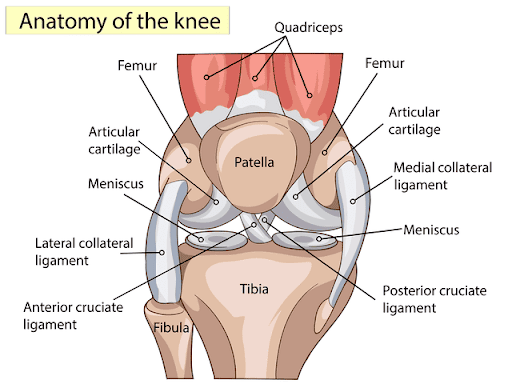
The knee also contains several soft tissues that reduce friction and absorb impact. Among these are the menisci—two C-shaped fibrocartilage pads located between the femur and tibia. Each knee has a medial meniscus on the inner side and a lateral meniscus on the outer side.
The menisci distribute weight across the joint, absorb shock during activities like walking, running, or jumping, and contribute to joint stability and smooth movement. A meniscus tear occurs when these cartilage pads are damaged. This can result from sudden twisting motions, high-impact forces, or repetitive stress over time. Degenerative changes from aging or repeated use can also weaken the meniscus, increasing the likelihood of injury.

A tear may cause frayed or irregular meniscal edges that can catch within the joint, potentially leading to pain, swelling, reduced mobility, or sensations of locking or instability. Meniscus tears are relatively common, particularly among athletes and older adults, and represent a significant portion of knee injuries.
Types of Tears in the Meniscus
Meniscus tears can vary in size, location, and severity, which helps guide management strategies.
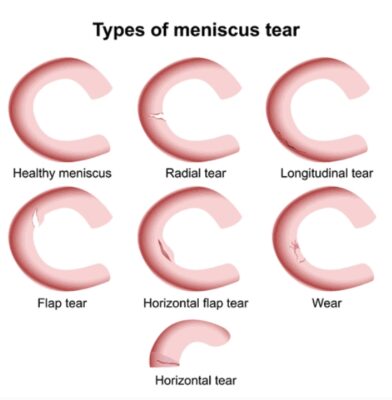
- Intrasubstance Tear (Incomplete): This type develops within the inner portion of the meniscus and usually does not reach the surface. It is often related to age-related degeneration and may be asymptomatic initially.
- Horizontal Tear (Longitudinal): A horizontal tear runs parallel to the tibial plateau, separating the meniscus into top and bottom layers. It often results from shear forces during twisting movements and may progress into a flap or bucket-handle tear.
- Radial Tear (Transverse): A radial tear extends from the inner edge of the meniscus outward, disrupting the collagen fibers that help maintain shape and distribute load. This can affect joint stability.
- Flap Tear: A flap tear occurs when a portion of the meniscus becomes detached or displaced, creating an irregular fragment that may interfere with knee movement and cause catching or pain.
- Bucket-Handle Tear: This displaced form of a longitudinal tear causes a segment of the meniscus to fold into the joint space. It is often associated with twisting or forceful landing and may limit knee extension or cause locking.
- Complex Tear: A complex tear involves multiple patterns within the same meniscus and is commonly seen with significant trauma or advanced degeneration. These tears can be more challenging to manage and may occur alongside other knee injuries.
- Oblique Tear: An oblique tear runs diagonally across the meniscus, often from twisting or sudden direction changes. It can create unstable fragments that affect joint mechanics and may overlap with other tear types.
[regenexx_form_blog]
Symptoms of a Torn Meniscus
Symptoms can vary widely. Some people experience persistent or intermittent discomfort, while others may have no noticeable symptoms.
Pain Along the Joint Line
Pain along the joint line, where the femur and tibia meet, is common. Contributing factors may include:
- Nerve response: Irritation or pressure on nearby nerve fibers can cause pain signals.
- Inflammation: The body may release inflammatory mediators after injury, leading to increased sensitivity, swelling, or warmth.
- Persistent low-grade inflammation: Factors such as previous knee injury, higher body weight, age, or repetitive joint stress can prolong inflammation.
Research suggests that a significant proportion of meniscus tears may not produce symptoms, but pain, swelling, stiffness, or instability may indicate the need for further evaluation.
- Swelling or Stiffness: Fluid may accumulate in the joint (effusion), causing pressure, stiffness, and reduced mobility.
- Sensation of the Knee Giving Way: Some individuals may feel instability or that the knee is buckling, particularly during weight-bearing activities or direction changes. This can result from altered load distribution in the joint.
- Knee Popping After Injury: A popping sensation in the knee may indicate possible injury to the meniscus, ligaments, or cartilage. It may occur with swelling, discomfort, or joint instability. Read More About Knee Popping After Injury.
- Can’t Straighten Knee: Difficulty achieving full knee extension may stem from a meniscal tear, stiffness, or other joint damage. It may lead to swelling, discomfort, or locking sensations. Read More About Can’t Straighten Knee.
Knee Locking Up: Knee locking may be caused by a meniscal tear, joint inflammation, or cartilage disruption. This can make it difficult to bend or straighten the knee and may present with swelling or discomfort. Read More About Knee Locking Up
What Causes a Meniscus Tear?
Meniscus tears are generally classified as either acute or degenerative. Acute tears usually result from sudden force or twisting of the knee, while degenerative tears develop gradually over time. Age-related changes can weaken the meniscal tissue, making it more prone to injury.
Knee Injuries
Knee injuries are a common factor in meniscus tears. Contributing factors include:
- Sports Participation: Acute tears often occur during activities that involve pivoting, sudden stops, or physical contact, such as football, basketball, and soccer. Even non-contact sports like tennis or skiing may increase risk due to frequent directional changes.
- Twisting or Rotation: Shear forces created when different parts of the meniscus move in opposite directions can cause tears. This may happen during abrupt twisting, pivoting, or forceful landings on one leg.
Meniscus tears frequently occur alongside other knee injuries. The anterior cruciate ligament (ACL) is commonly involved, and research suggests that an ACL injury may increase the likelihood of a meniscus tear.
Aging
Age-related changes affect various structures in the knee, including the meniscus. Over time, the meniscus may become thinner, less flexible, and more vulnerable to tearing.
Certain factors can accelerate degenerative changes, such as:
- Higher body weight
- Tobacco use
- Repetitive strain from work or sports (e.g., lifting, jumping, pivoting)
- Poor posture
- Structural variations, such as congenital cartilage thinning, bow legs (genu varum), or knock knees (genu valgum)
Chronic joint conditions can also increase risk. Studies indicate that 60–90% of individuals with osteoarthritis show MRI evidence of meniscal tears.
73-75 Ferry Street
Newark, NJ 07105
Request an Appointment
Call to Schedule Schedule OnlineClinic Hours
| Sunday | Closed |
| Monday | 9AM–5PM |
| Tuesday | 9AM–5PM |
| Wednesday | 9AM–5PM |
| Thursday | 9AM–5PM |
| Friday | 9AM–5PM |
| Saturday | Closed |
Can a Torn Meniscus Heal on Its Own?
Some meniscus tears can heal naturally, especially in areas with a good blood supply, since the meniscus is living tissue.
Factors Affecting Healing:
- Tear Location: The meniscus is divided into three zones—red, red-white, and white—which differ in blood supply:
- Red zone: Outer edge with strong blood supply; tears here have higher healing potential.
- Red-white zone: Middle region with moderate blood supply; healing may be slower.
- White zone: Inner area lacking blood supply; self-repair is unlikely and often requires intervention.
- Tear Size: Smaller tears are more likely to heal naturally, particularly if there is no joint locking or loose fragment. Larger tears may interfere with movement or blood flow, reducing the likelihood of healing.
- Other Factors: Age, prior knee injuries, and the presence of degenerative conditions like osteoarthritis can also influence healing outcomes.
Physical therapy may support healing in some cases. However, the body may benefit from additional help. Procedures using Regenexx lab processes and interventional orthobiologics at Pain Doctors Medical are designed to assist the body’s natural healing response and may offer an alternative to surgery or long-term medication use.
Meniscus tear recovery without surgery
Conventional Treatment Recommendations for a Torn Meniscus
Conventional approaches for managing a torn meniscus focus on reducing discomfort and supporting joint function. In cases of more significant damage, additional interventions may be considered.
- RICE Method: The RICE method—rest, ice, compression, and elevation—is often recommended as an initial approach. Resting the knee can help prevent further strain, while ice may temporarily reduce inflammation. Compression with a brace or bandage can provide joint support, and elevation may help limit fluid buildup that contributes to swelling. Although widely used, recent research indicates that excessive icing and restricted blood flow could potentially slow the healing process.
- Nonsteroidal Anti-inflammatory Drugs (NSAIDs): NSAIDs are commonly used to reduce joint discomfort and inflammation. Although they may offer temporary relief for conditions involving joints, muscles, or the spine, prolonged use has been associated with increased risks to cardiovascular, kidney, and gastrointestinal health. These risks may require ongoing evaluation. Read More About NSAIDs.
- Surgical Procedures
Surgery may be considered if conservative treatments do not improve symptoms or if the tear significantly affects joint function. Surgical options include:- Partial meniscectomy: Removal of the damaged portion of the meniscus.
- Meniscus repair: Suturing torn segments to support healing and preserve as much tissue as possible.
- Meniscus transplantation: Implantation of a donor meniscus in cases of extensive tissue damage, aiming to restore cushioning and support within the joint.
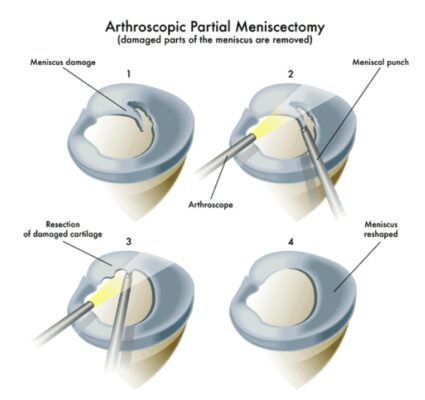
These procedures carry risks such as infection, blood clot formation, and the potential for additional damage to nearby knee structures. One study reported that approximately 19 percent of surgical procedures for meniscus tears fail within five years and may require revision surgery.
Why Consider Alternatives to Meniscus Surgery?
Studies suggest that surgical intervention for a meniscus tear may not always be the best or only option. In certain cases, research indicates that it may not offer significantly greater benefit than physical therapy alone. Many individuals are often unaware of the potential for varied success rates or the long-term changes that can follow surgery.
Procedures that remove part or all of the meniscus may alter the knee’s natural joint mechanics. These changes can increase the likelihood of developing joint degeneration, including knee osteoarthritis, over time.
Torn Meniscus Recovery Time Without Surgery
Typical knee surgeries often require several months for recovery and rehabilitation to restore strength and mobility. The duration of recovery depends on several factors, including the type and severity of the tear, the exact procedure performed, and the patient’s overall health. Research suggests that recovery outcomes may be significantly more challenging following knee replacement compared to less invasive procedures such as knee arthroscopy.
Procedures using Regenexx injectates may offer a non-surgical alternative to help preserve the meniscus’s cushioning and stabilizing role in the knee. In many cases, recovery time may be shorter than with surgery. A number of patients are able to return to routine activities within a few weeks, with more physically demanding activities, such as sports, potentially resuming within a few months.
| Regenexx-SD | Surgery | |
|---|---|---|
| Return to Daily Routine | 2 to 5 days | 6+ weeks |
| Return to Sports | 3 to 6 months | 1 year |
| Recovery | Brace, up to 6 weeks PT | Crutches, brace, extensive, no driving, 3 to 6 months PT |
| Pain Management | Mostly over-the-counter pain medication (days) | Prescription pain medication for weeks (weeks) |
| General Anesthesia | No | Yes |
| Keep Your Meniscus | Yes | No |
See how Regenexx helped Dimitri avoid surgery and quickly get back to what he loves.
Note: Like all medical procedures, Regenexx procedures have a success and failure rate. Not all patients will experience the same results
The Regenexx Approach for Torn Meniscus
The Regenexx approach supports recovery by enhancing the body’s natural healing capabilities through the use of interventional orthobiologics. This option may provide an alternative to typical surgical procedures and may help limit reliance on medications commonly used for joint pain.
Physicians in the licensed Regenexx network create customized treatment plans based on the type and location of the meniscal injury. Plans may recommend one or more of the following Regenexx orthobiologic injectates:
Regenexx SD Injectate
Procedures using Regenexx SD injectate follow proprietary treatment protocols utilizing Bone Marrow Concentrate (BMC), which contains a patient’s own mesenchymal signaling cells and other cellular healing agents. The Regenexx processing routinely achieves cell concentrations that are significantly higher than what is typically achieved through non-Regenexx methods.
Regenexx SCP Injectate
Regenexx SCP injectate is a highly concentrated version of platelet-rich plasma (PRP). During the procedure, blood is drawn and processed to isolate and concentrate growth factors, which are then delivered into the affected meniscus using advanced imaging guidance for precise placement. Regenexx SCP injectate provides a higher growth factor concentration than typical PRP treatments.
Regenexx PL Injectate
Regenexx PL injectate is a specialized derivative of PRP known as platelet lysate that delivers a rapid and enhanced release of growth factors. It is often used in combination with Regenexx SCP injectate or bone marrow concentrate as part of a comprehensive, orthobiologic treatment plan.
Watch a meniscus tear patient’s Regenexx procedure in this 4-minute video.
Before and After Procedure MRI Images
Review the results of a patient who opted for a procedure using Regenexx injectates instead of undergoing surgery. Scroll right to view the MRI before treatment, and left to see the post-treatment outcome. The BEFORE image highlights the torn meniscus, while the AFTER shows the treated area appearing as a dark, diagonal band, indicating structural change following the procedure.
Individual outcomes may vary. For more information about patient outcomes, please visit our Patients’ Results page: https://regenexx.com/results/.


Patient MRI – View 2
FAQs
The meniscus is a cushion of cartilage between the bony ends (condyles) of your femur (the bone in your thigh) and tibia (the bone in your shin). Each knee has two menisci: a lateral meniscus and a medial meniscus.
Together, they reduce friction during movement, help the femur and tibia fit together, distribute your body weight across the knee, act as a shock absorber, help distribute fluid that lubricates the knee joint, and protect the gliding cartilage within the knee.
Tears of the meniscus can be the result of wear and tear on the joint or can occur when there’s an injury, such as some type of sports trauma.
The meniscus has a red zone — the outer third of the meniscus — with a good blood supply and a white zone — the rest of the meniscus — with no blood supply. Torn cartilage in the red zone has the potential to heal, particularly in those younger than 30, while tears in the white zone rarely heal due to lack of blood supply.
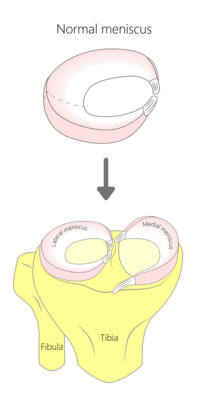
Knee meniscus
Research shows that surgery for a torn meniscus is overprescribed and often no more effective than physical therapy.2 Unfortunately, patients are not always informed of the low success rate of these procedures.
Whether patients have a partial meniscus “clean-up” (a piece is surgically removed) or a complete meniscectomy, outcomes are often unsuccessful. Both procedures change knee biomechanics and may later result in knee arthritis.
If you have a torn meniscus, you may experience knee pain or mechanical limitations. Some people have constant pain, some have intermittent pain, and others have no pain at all.
Unless the torn meniscus has locked the knee, many people with a torn meniscus can walk, stand, sit, and sleep without pain. Other possible symptoms include:
- Swelling or stiffness in the knee
- A popping sensation
- Difficulty fully straightening the knee
- Feeling as if the knee is collapsing under weight
Sometimes nothing, at least initially. If you have no pain or mechanical issues in the joint, you may choose to wait to see if it heals on its own. Depending on the type and severity of the tear, you may have pain, stiffness, and reduced function. There’s also the possibility of developing knee arthritis as a result of the damage.
Tears that occur in the red zone of your meniscus and have the best blood circulation heal the best with regenerative orthopedic procedures. The tears we see and treat most often are listed below; however, other types of tears may also benefit from regenerative orthopedic procedures. After a thorough examination and consultation, your Regenexx practitioner can answer this question more definitively.

Meniscus Flap Tear
These tears usually involve a small percentage of the meniscus and do not have the ability to heal on their own because they occur in an area that does not have a good blood supply. Flap tears are the type most commonly “trimmed” or “shaved”, (removed) leading to long-term issues.
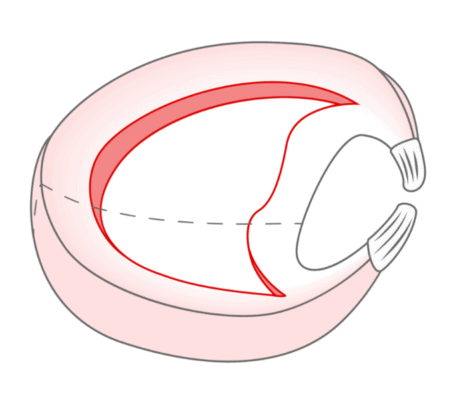
Bucket Handle Meniscus Tear
The entire inner rim of the medial meniscus can be torn in what is called a bucket handle tear. These tears usually occur in an area of good blood supply in the meniscus
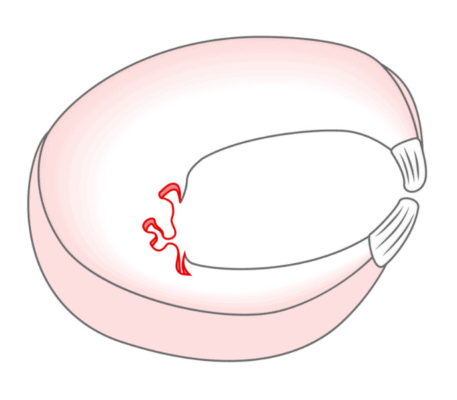
Complex Degenerative Meniscus Tears
These tears of the meniscus are usually seen as a part of the overall condition of osteoarthritis of the knees in older adults and cause the menisci to fray and tear in multiple directions.
consistent MRI finding associated with pain is swelling in the bone called bone marrow edema (BME) or a bone marrow lesion (BML). Current research on knee pain due to arthritis has shifted from cartilage loss to this bone marrow swelling.
Get started to see if you are a Regenexx candidate
To talk one-on-one with one of our team members about how the Regenexx approach may be able to help your orthopedic pain or injury, please complete the form below and we will be in touch with you within the next business day.
References
1. Centeno C, Sheinkop M, Dodson E, Stemper I, Williams C, Hyzy M, Ichim T, Freeman M. A specific protocol of autologous bone marrow concentrate and platelet products versus exercise therapy for symptomatic knee osteoarthritis: a randomized controlled trial with 2 year follow-up. J Transl Med. 2018 Dec 13;16(1):355. doi: 10.1186/s12967-018-1736-8. PMID: 30545387. [Google Scholar]
2. Moseley JB, O’Malley K, Petersen NJ, Menke TJ, Brody BA, Kuykendall DH, Hollingsworth JC, Ashton CM, Wray NP. A controlled trial of arthroscopic surgery for osteoarthritis of the knee. N Engl J Med. 2002 Jul 11;347(2):81-8. doi: 10.1056/NEJMoa013259.
PMID: 12110735. [Google Scholar]