

Non-Surgical Herniated Disc Treatment in Phoenix, AZ – Active Life
The discs in your spine are the shock absorbers between your vertebrae (spinal bones). They have a tough outer covering called the annulus fibrosus that encases a soft, gel-like substance called the nucleus pulposus.
The discs in your spine act as cushions between vertebrae, with a firm outer shell (annulus fibrosus) surrounding a gel-like interior (nucleus pulposus). When a disc herniates—meaning the outer shell tears and the inner material pushes out—this can irritate spinal nerves and lead to local pain or radiating discomfort into the limbs.
Herniated discs may also be referred to as slipped or ruptured discs, but these terms are often used interchangeably with disc bulges, which are structurally different. A bulging disc retains the inner material, while a true herniation involves a breach.

How Is a Herniated Disc Treated?
At our Phoenix location, your physician may also discuss how these approaches compare to surgical options. While surgery may be recommended if conservative care doesn’t help, it can weaken the disc and lead to increased strain on nearby spinal structures. Steroid injections can temporarily help the pain, they can cause severe side effects and reduce your body’s ability to heal. The final option is often an extremely invasive spine surgery (spinal fusion) in which two vertebrae are permanently joined together with hardware.
Procedures using Regenexx injectates at Active Life Physical Medicine & Pain Center may offer a less invasive alternative. These outpatient treatments use your body’s own platelets or bone marrow concentrate and are guided with imaging to help target damaged areas with precision.
How Long For Herniated Disc To Heal Without Surgery?
In many cases, herniated disc symptoms resolve over time. Studies have shown that a significant number of individuals improve with rest, activity modification, and conservative measures.
For individuals in Phoenix experiencing persistent symptoms—such as ongoing low back pain or radiating leg discomfort—procedures using Regenexx lab processes may provide an alternative to surgery. These treatments aim to reduce inflammation and support the body’s natural healing response, typically with:
- Fewer disruptions to daily activity
- Less downtime than surgery
- Minimal need for prescription pain medications
Regenexx PL Injectate: Avoiding the harmful side effects of epidural steroids and back surgery
How To Treat a Herniated Disc Without Surgery
Outpatient procedures using Regenexx injectates involve custom concentrations of your biologics, including platelet-rich plasma (PRP) or bone marrow concentrate (BMC). In the case of herniated discs, a Regenexx PL injectate (platelet lysate) may be used—this is a filtered form of PRP, designed specifically for use around sensitive structures like nerve roots.
At our Phoenix clinic, these image-guided procedures are performed by physicians in the licensed Regenexx network, aiming to help reduce pain and improve function through targeted, less invasive care.
Am I a candidate?Herniated Disc MRI
Below are MRI images of the result of a patient who had a procedure using Regenexx PL injectate to treat a subligamentous disc herniation. After the procedure, their pain dropped quickly, and they returned to their normal activities within weeks.
Scroll the arrow to the right to see the MRI of the disc before the procedure — the white/lighter area indicates damage. Scroll to the left to see the MRI of the disc after. The images are two years apart from the original treatment date.
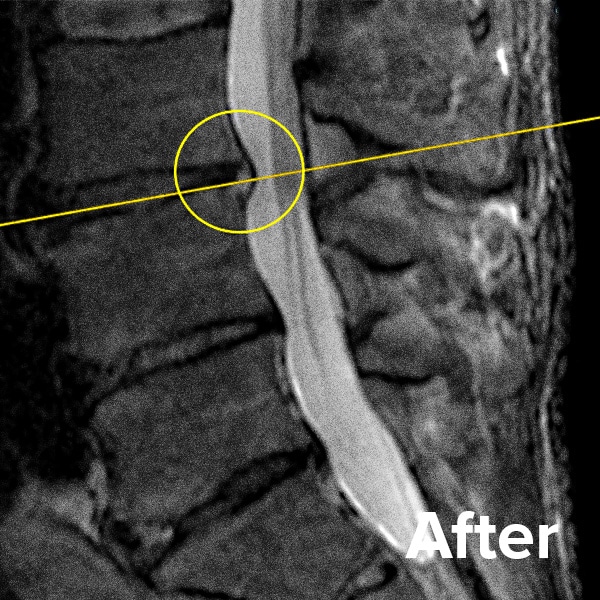
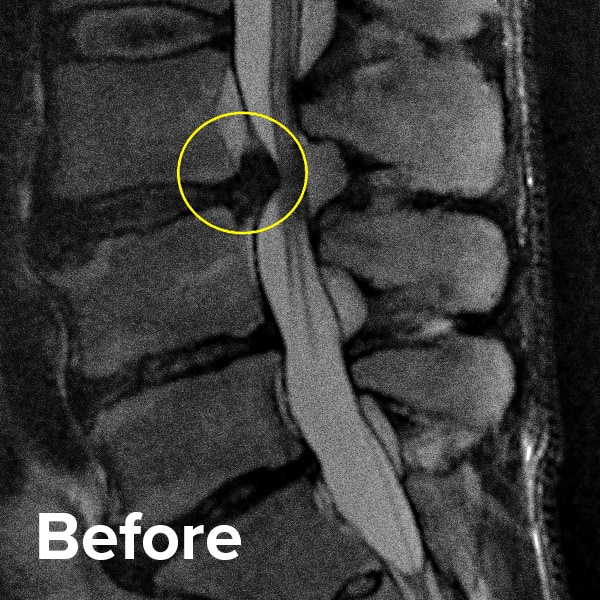
Herniated disc before and after MRI images 1
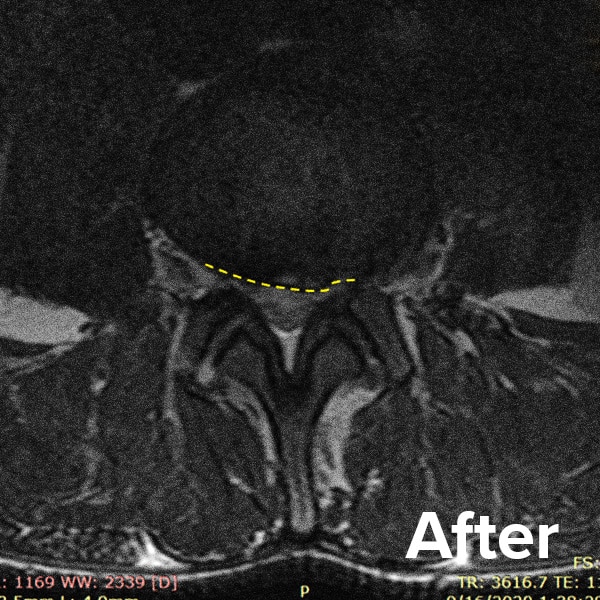
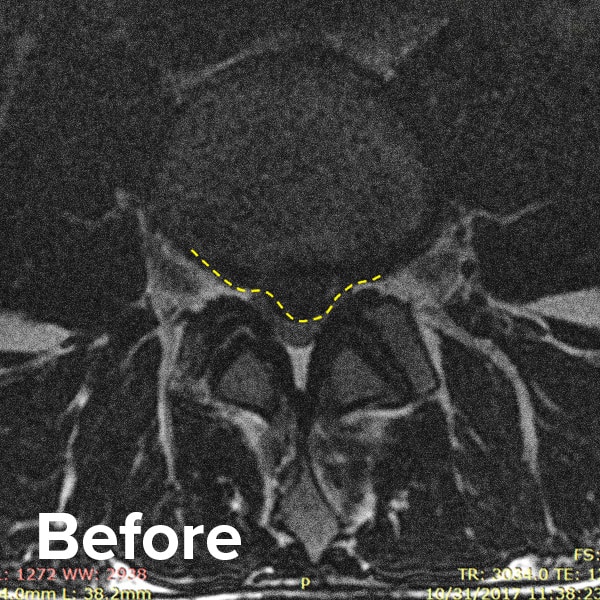
Herniated disc before and after MRI images 2
Request an Appointment
Webinar: Treating Back Pain Without Surgery

Join Chris Centeno, MD, founder of Regenexx, to learn how Regenexx procedures can help treat your herniated disc without surgery and lead to a faster recovery.
During this free webinar you’ll learn:
- How procedures using bone marrow concentrate (BMC) and platelet-rich plasma (PRP) compare to surgery and other spine pain treatment options
- Procedure expectations
- Answers to the most common questions about regenerative medicine treatments