

Alternative Herniated Disc Treatments In Regional West Physicians Clinic – Scottsbluff, NE
The discs in your spine are the shock absorbers between your vertebrae (spinal bones). They have a tough outer covering called the annulus fibrosus that encases a soft, gel-like substance called the nucleus pulposus.
A disc herniation happens when the outer covering is ruptured and the gel escapes the disc. This causes the disc to put pressure on and irritate the spinal nerve roots or spinal cord, leading to pain around the area of the disc (localized pain) and causing pain, tingling, numbness, or weakness to radiate to the arms and legs (radicular pain).
Herniated discs are sometimes referred to as slipped or ruptured discs. However, they are not the same as a disc bulge or protrusion, where the gel-like material is still contained within the disc.

How Is a Herniated Disc Treated?
More conservative treatment options include acupuncture, physical therapy, prescription medications, and high-dose epidural steroid injections. While steroid injections can temporarily help the pain, they can cause severe side effects and reduce your body’s ability to heal.
If none of these work, the next course of treatment is usually back or neck surgery that cuts away a portion of the disc. However, this approach can leave the disc weaker and more likely to be injured again. The final option is often an extremely invasive spine surgery (spinal fusion) in which two vertebrae are permanently joined together with hardware.
How Long For Herniated Disc To Heal Without Surgery?
Studies have shown that in the majority of cases herniated discs (also known as slipped or ruptured discs) the pain will go away on its own. The key is staying comfortable and being able to remain active while that happens.
However, a smaller percentage of people experience severe and longer-lasting pain.
Our nonsurgical treatments for herniated disc problems can offer relief from lower back, buttock, and leg pain and numbness and tingling in the feet or legs. Downtime is a fraction of what it is with surgery and generally requires little or no opioid pain medications or time off of work.
Regenexx PL-Disc: Avoiding the harmful side effects of epidural steroids and back surgery
4021 Avenue B
Scottsbluff, NE 69361
Request an Appointment
Call to Schedule Schedule OnlineClinic Hours
| Sunday | Closed |
| Monday | 8AM–5PM |
| Tuesday | 8AM–5PM |
| Wednesday | 8AM–5PM |
| Thursday | 8AM–5PM |
| Friday | 8AM–5PM |
| Saturday | Closed |
How To Treat a Herniated Disc Without Surgery
During Regenexx’s outpatient procedures, custom concentrations of your body’s natural healing agents are injected into the exact areas of damage in the spine. Treatments use only your own blood to make super-concentrated platelet-rich plasma (PRP) or your own bone marrow concentrate (BMC), which contains stem cells.
Treatment for herniated discs may include a Regenexx PL-Disc Procedure. The PL stands for platelet lysate, which is a highly specialized derivative of PRP.
Am I a candidate?Watch a real Regenexx spinal procedure performed by a certified Regenexx physician.
Our goal is to use the least invasive, least expensive procedure to get the desired results. Your Regenexx physician will work with you to determine whether that would be a platelet procedure or a BMC procedure.
Herniated Disc MRI
Below are MRI images of the outcome of a patient who had a Regenexx PL-Disc procedure to treat a subligamentous disc herniation. After the procedure, their pain dropped quickly, and they returned to their normal activities within weeks.
Scroll the arrow to the right to see the MRI of the disc before the Regenexx PL-Disc procedure — the white/lighter area indicates damage. Scroll to the left to see the MRI of the disc after. The images are two years apart from the original treatment date.
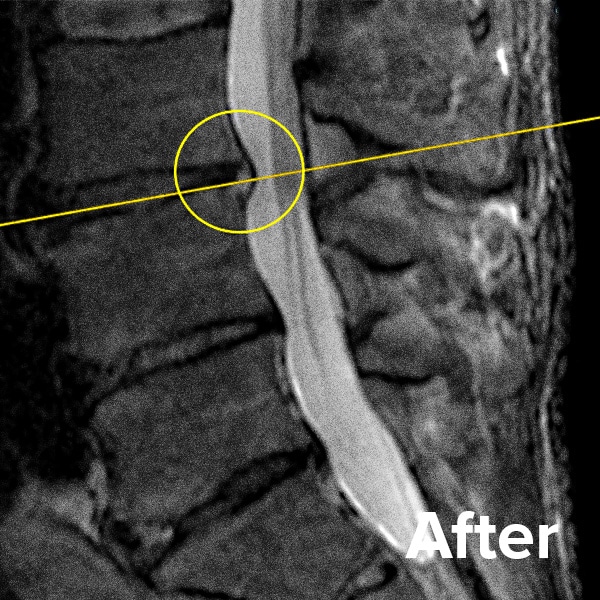
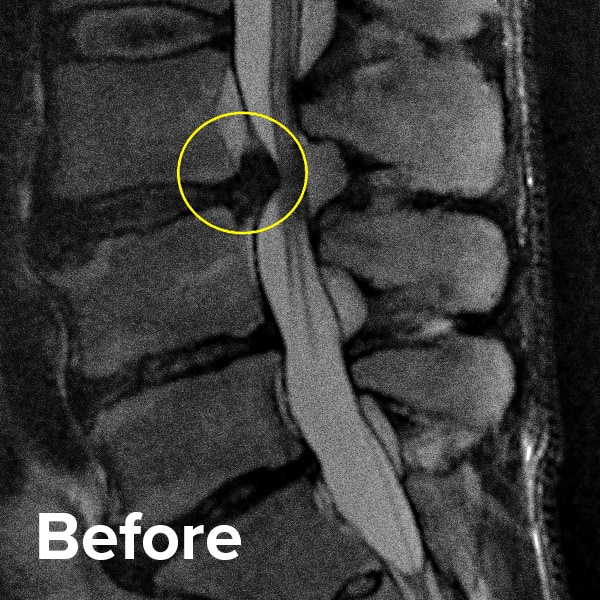
Herniated disc before and after MRI images 1
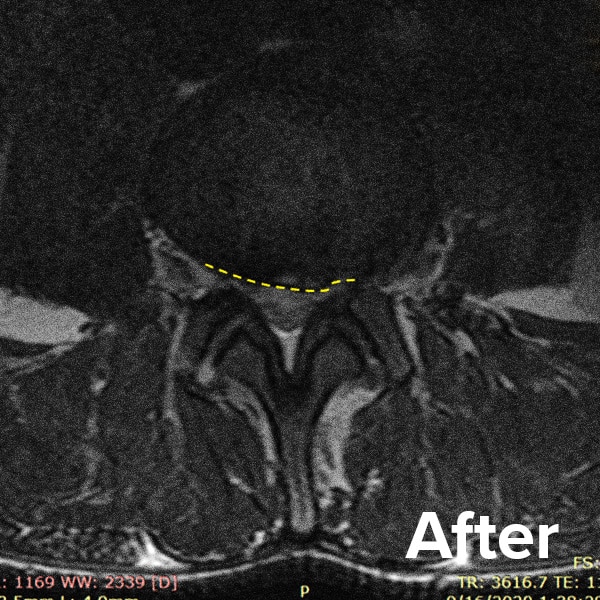
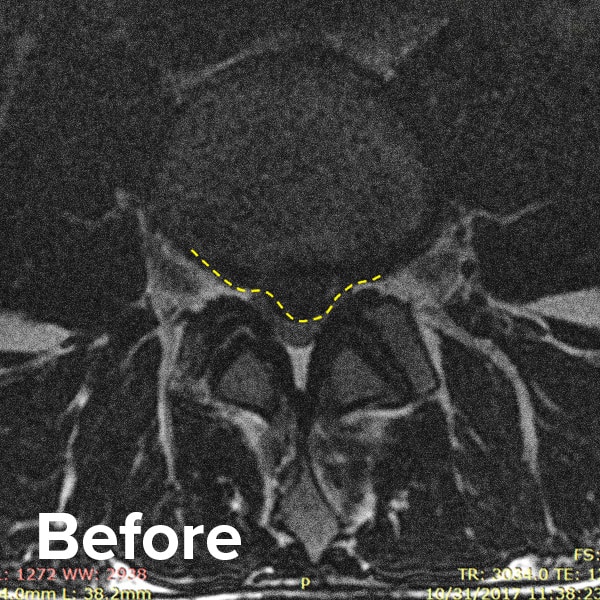
Herniated disc before and after MRI images 2
u003ch2u003eSee If Regenexx Is Right For Youu003c/h2u003ernTo speak with one of our team members about how Regenexx may be able to help your herniated disc pain or injury, please complete the form below and we will be in touch with you by the next business day.
Regenexx is committed to your privacy. We do not sell or share your information to third party vendors. By submitting the form you agree that you’ve read and consent to our Privacy Policy.
How will we communicate with you and provide information about Regenexx? Text is available for quicker response. Message and data rates may apply. Frequency varies. Reply HELP for help, STOP to unsubscribe. We may also reach out via email, phone, or other electronic means.
What about health insurance or medical benefits? What may be covered or reimbursed depends on the details of your plan. Insurance typically covers evaluations and diagnostic testing (if recommended) but most do not cover Regenexx Procedures. Some Employer specific Regenexx Benefits plans do also cover Regenexx Procedures. Your plan’s representative can help verify your benefits, out-of-pocket costs, and coverage.
Webinar: Treating Back Pain Without Surgery

Join Chris Centeno, MD, founder of Regenexx, to learn how Regenexx procedures can help treat your herniated disc without surgery and lead to a faster recovery.
During this free webinar you’ll learn:
- How procedures using bone marrow concentrate (BMC) and platelet-rich plasma (PRP) compare to surgery and other spine pain treatment options
- Procedure expectations
- Answers to the most common questions about regenerative medicine treatments