

Understanding Shoulder Labral Tears and Recovery Options
A shoulder labral tear occurs when the labrum, a ring of fibrocartilage that helps stabilize and cushion the shoulder joint, is damaged. This type of injury may result from acute trauma, repetitive motion, or age-related wear. Symptoms often include pain, instability, and reduced shoulder function.
Initial treatment typically focuses on pain management; however, this may overlook contributing issues such as rotator cuff injuries or joint degeneration. In more severe cases, surgery may be recommended to restore stability, though surgical procedures carry potential risks such as infection, extended recovery time, and variable outcomes.
Physicians in the licensed Regenexx network perform outpatient procedures using Regenexx injectates as a non-surgical option. These image-guided treatments apply interventional orthobiologics to support the body’s natural healing process. This approach offers a less invasive alternative that may help reduce the need for surgery and long-term use of prescription medications.
Shoulder Labrum Anatomy and Functions
The shoulder joint connects three main bones:
- Humerus: the upper arm bone
- Scapula: the shoulder blade
- Clavicle: the collarbone

The primary joint of the shoulder is the glenohumeral joint, a ball-and-socket joint that connects the head of the upper arm bone (the “ball”) to a shallow socket in the shoulder blade called the glenoid.
This design allows for a wide range of arm motion, but the joint is naturally less stable because the socket is relatively shallow. Surrounding the rim of the glenoid is the labrum, a thick band of cartilage that helps deepen the socket. The labrum functions like a bumper, helping to keep the ball of the upper arm bone securely in place. It contributes to joint stability while allowing the shoulder to retain its mobility.
What Is a Labral Tear in the Shoulder?
Labral tears are injuries to the cartilage within the shoulder joint. They occur when repetitive stress or sudden trauma disrupts the collagen fibers that make up the labrum. These injuries are relatively common in physically active individuals and can worsen with age.
Labral tears can be classified as acute or traumatic. Acute tears may result from a single incident involving significant force or shearing pressure that causes the cartilage to move in opposite directions, leading to fraying or tearing. According to a 2019 study, MRI scans revealed evidence of labral tears in approximately one-quarter of asymptomatic ice hockey players, highlighting that not all labral tears cause symptoms.
In some cases, a labral tear may occur alongside another injury to the shoulder. Traumatic events commonly associated with labral damage include:
- Dislocations: when a bone is forcibly displaced from its normal position within the joint.
- Subluxations: partial dislocations where bones are not fully aligned but have shifted out of place.
As bones or surrounding structures move out of alignment, the labrum may be subjected to pulling forces, which can worsen tearing.
Types of Labral Tears in the Shoulder
Labral tears are often categorized based on their location in the shoulder joint and the way the injury occurs:
- Anterior Labral Tear (Bankart Lesion): Affects the front of the labrum, often caused by shoulder dislocation or repetitive overhead movement.
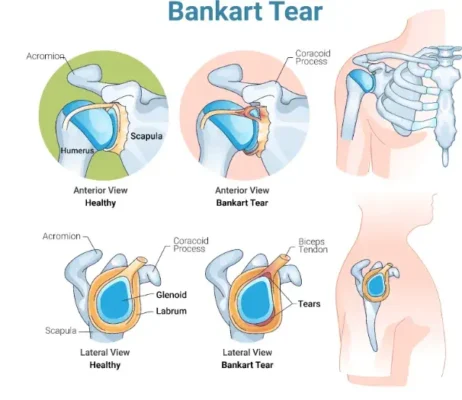
- Posterior Labral Tear (Reverse Bankart Lesion): Affects the back of the labrum, often caused by repeated compression or rotation. Less common than Bankart or SLAP tears.
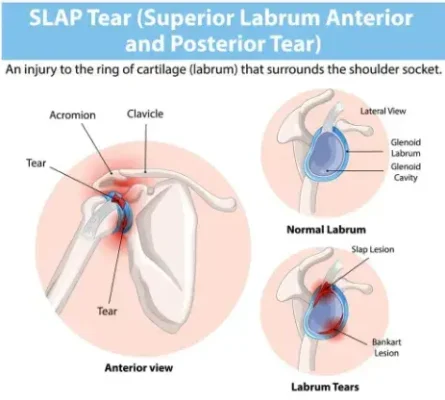
- SLAP Tear (Superior Labrum, Anterior to Posterior): Involves the top of the labrum where the biceps tendon attaches. May cause pain, instability, and reduced function.
- Degenerative Labral Tear: Caused by age-related wear, this tear may develop gradually and is often seen with arthritis.


Labral Tears Symptoms
It is possible to have a labral tear without experiencing any symptoms. In one study, MRI scans revealed that labral irregularities were present in up to 70% of individuals who reported no shoulder discomfort or functional issues.
However, common symptoms of a labral tear include:
Pain And Swelling
Labral damage may result in pain that is felt deep within or surrounding the shoulder joint. When the labrum is torn, the body activates an inflammatory response, which represents the body’s natural attempt to address tissue injury. This process may lead to swelling and discomfort.
Acute injuries are typically associated with more intense pain and inflammation shortly after the incident. In some situations, inflammation may continue at a low level even after the tissue has healed, which may contribute to ongoing pain over time.
Popping, Locking, Or Grinding In The Joint
A sudden shoulder injury may be accompanied by a noticeable popping sensation, which can occur with tears or dislocations. After the initial event, movements may trigger audible clicks, grinding, or locking.
The grinding sensation, referred to as crepitus, may occur when a tear in the labrum creates uneven edges in the shoulder joint. As the joint moves, these irregular surfaces may catch or rub, producing sound or vibration, with or without pain.
Loss Of Range Of Motion
Shoulder motion may become limited when a labral tear is present. This restriction may be related to pain, inflammation, or physical interference from the torn tissue that prevents smooth joint movement.
Over time, reduced use of the shoulder can lead to stiffness and diminished flexibility in the surrounding muscles, further decreasing the ability to move the shoulder freely.
Shoulder Dislocation
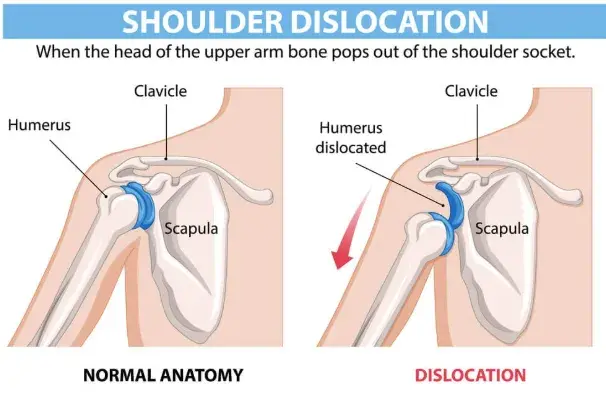
Labral tears are commonly associated with joint instability and may make shoulder dislocations more likely. When the labrum is compromised, it may be less recommended in holding the shoulder joint securely, increasing the chances of the upper arm bone moving out of place.
Recurrent dislocations may lead to additional labral injury, creating a cycle in which each event increases the likelihood of future dislocations and further compromises joint stability.
If a torn labrum is believed to be contributing to recurrent shoulder dislocations, surgical intervention may be recommended by a physician in the licensed Regenexx network. Before pursuing this option, it is important to consider both the potential benefits and limitations of shoulder dislocation surgery.
This procedure is associated with certain risks, including the possibility of infection, continued joint instability, or injury to surrounding shoulder structures. In addition, recovery may require a significant period, typically ranging from 6 to 12 months, during which activity may be restricted to support healing.
Instability and Weakness
A torn labrum may contribute to a feeling of instability in the shoulder joint. Movements such as throwing or reaching overhead may be accompanied by a sensation that the shoulder is “giving out.” This can occur when the damaged labral tissue is no longer able to help stabilize the joint and maintain alignment of the shoulder bones.
Difficulty Sleeping on the Affected Side
Discomfort related to a labral tear may interfere with the ability to sleep comfortably on the injured shoulder. Unintentionally placing pressure on the affected side during sleep may compress irritated tissues, which could lead to increased inflammation and heightened pain, ultimately affecting sleep quality.
Recurrent dislocations may lead to additional labral injury, creating a cycle in which each event increases the likelihood of future dislocations and further compromises joint stability.
Investigating the Causes and Risk Factors
Labral tears in the shoulder are generally classified into two main types:
- Acute labral tears: These typically result from sudden trauma to the arm, such as a fall onto an outstretched hand or a direct blow.
- Degenerative labral tears: These develop gradually due to age-related changes or repetitive stress placed on the shoulder joint over time.
Contributing Factors and Underlying Risk Factors
- Repetitive Overhead Activities: Repeated motions like throwing or lifting that may cause small tissue injuries (microtrauma), leading to labral tears.
- Postural Imbalances: Poor posture, such as slouching or forward head position, increases stress on the shoulder joint.
- Age-Related Degeneration: Gradual cartilage and soft tissue wear due to aging, which can result in tearing without a specific injury.
- Glenoid (Shoulder Socket) Irregularities: Structural issues in the socket that increase strain on the labrum and raise injury risk.
- Connective Tissue Conditions: Inherited disorders like Ehlers-Danlos syndrome cause joint laxity and increase friction within the joint.
- Scapular Dyskinesis: Abnormal shoulder blade movement that disrupts joint alignment and can worsen labral wear.
- Prolonged or Improper Crutch Use: Extended or incorrect use of crutches that places continuous strain on the shoulder.
- History of Shoulder Surgery: Scar tissue or changes in joint mechanics from prior procedures may increase tear risk.
- Shoulder-Intensive Activities: Sports or jobs with frequent shoulder use (e.g., swimming, gymnastics) that increase wear on the labrum.
2577 East 17th Street
Suite #18
Brooklyn, NY 11235
Request an Appointment
Call to Schedule Schedule OnlineClinic Hours
| Sunday | Closed |
| Monday | 9AM–5PM |
| Tuesday | 9AM–5PM |
| Wednesday | 9AM–5PM |
| Thursday | 9AM–5PM |
| Friday | 9AM–5PM |
| Saturday | Closed |
Diagnosing a Labral Tear in the Shoulder
A labral tear may be diagnosed through a combination of evaluation methods to confirm the injury and rule out other conditions:
- Symptom and Medical History Review: Past dislocations, genetic conditions, or previous shoulder surgeries may be reviewed to identify contributing risk factors.
- Physical Examination: Guided shoulder movements may be used to assess pain, instability, or mechanical symptoms.
- Magnetic Resonance Imaging (MRI) or Ultrasound: These imaging tools may help visualize soft tissue structures, including the labrum.
- X-rays: Often used to exclude bone abnormalities or structural issues unrelated to soft tissue.
Conventional Treatment Options
Conventional treatment approaches are intended to help reduce symptom severity and support improved shoulder function. These may include both non-surgical and surgical options.
Non-Surgical Treatment Options
Non-surgical options are typically considered the initial approach for managing shoulder labral tears. These strategies are intended to reduce symptoms and support recovery without surgical intervention:
- Conservative Management: Rest and temporary activity adjustments may help reduce strain on the shoulder, allowing tissue recovery and gradual return to function.
- Physical Therapy: Targeted exercises guided by a physical therapist may help improve joint stability, strengthen supporting muscles, and enhance range of motion.
Surgical Interventions
Surgical intervention may be considered when a labral tear is extensive, leads to significant shoulder dysfunction, or when non-surgical measures do not provide sufficient improvement. These procedures are performed to reduce joint instability and support pain reduction by addressing structural damage. Common Surgical Options
- Arthroscopic Repair: A small camera (arthroscope) and specialized instruments are inserted through small incisions to visualize and repair the torn labrum.
- Labrum Repair Surgery: A more extensive surgical procedure in which the torn labrum is secured back to the bone using anchors, typically made of metal or plastic.
Any surgical procedure carries potential risks, including the possibility of infection and an extended recovery period. One study also identified specific complications related to labral repair, such as:
- Failure of the anchors: These small devices, typically made of metal or plastic, are used to secure tissue during repair. They may fail if improperly placed or as a result of material fatigue over time.
- Chondrolysis: A rare but serious complication characterized by rapid cartilage degeneration and a resulting loss of joint space.
No associated treatment options were identified at this time. Please refresh the page to check for updated information.
How Successful Is Shoulder Labrum Repair Surgery?
Labral tear surgery may involve repositioning the biceps tendon to help stabilize the shoulder joint. While this approach may offer benefits in some cases, it is associated with potential risks and often requires a recovery period that includes guided physical rehabilitation.
In some situations, surgery may not completely resolve the underlying instability of the shoulder, which could contribute to future injury risk. It is recommended that all available treatment options be discussed with a physician to determine the most appropriate course of care.
Can Recovery from Tears Be Accelerated Without Surgery?
It is commonly believed that surgery may result in significant pain relief; however, outcomes are not always consistent. In many cases, surgical procedures may fall short of expectations.
A study published in 2021 reported post-surgical complications including subluxation, full dislocation, and persistent joint instability. In some cases, revision surgery was required. As with any surgical intervention, there are inherent risks such as infection and extended rehabilitation timelines.
It is important to note that not all shoulder labral tears require surgical correction. Improved shoulder function may be achieved without undergoing the risks and potential complications associated with invasive procedures.
The Regenexx approach provides a non-surgical alternative. Procedures using Regenexx injectates utilize customized concentrations of interventional orthobiologics, including platelet-rich plasma and bone marrow concentrate, to support the body’s natural healing process.
Pain Doctors Medical: Supporting Shoulder Function Recovery
The Regenexx approach utilizes interventional orthobiologics to support the body’s natural healing process. Procedures using Regenexx injectates offered through Pain Doctors Medical may serve as an alternative for individuals seeking to avoid surgery, extended recovery, or long-term use of prescription pain medications.
The classification and severity of the labral tear help the physician determine whether this approach may be suitable. A thorough evaluation by a physician in the licensed Regenexx network, such as those practicing through Pain Doctors Medical, is the first step.
Customized treatment plans may include one or more of the orthobiologics below.
- Regenexx SD Injectate: Procedures using Regenexx-SD injectate follow a proprietary protocol involving Bone Marrow Concentrate (BMC), which contains the patient’s mesenchymal stem cells. This lab processing routinely achieves a significantly higher concentration of cells compared to non-Regenexx methods.
- Regenexx SCP Injectate: This super-concentrated formulation of platelet-rich plasma (PRP) is created by drawing blood and isolating growth factors. The purified solution is injected with imaging guidance for accuracy. The SCP injectate available through Pain Doctors Medical contains a higher concentration of growth factors than typical PRP.
- Regenexx PL Injectate: Regenexx-PL injectate delivers a fast-acting, highly concentrated release of growth factors. This specialized derivative of PRP is often used in combination with other orthobiologics, such as PRP and BMC, as part of comprehensive treatment strategies offered by Pain Doctors Medical.
Help Improve Shoulder Function Without Surgery
Shoulder labrum tears can affect mobility and make daily activities difficult or painful. For individuals who have not found relief with medication, surgery is not the only option.
Pain Doctors Medical in Brooklyn, NY, offers procedures using Regenexx injectates that utilize interventional orthobiologics to support the body’s natural ability to address tissue injury. This non-surgical approach may help improve shoulder function, mobility, and joint stability without the need for invasive intervention.
u003ch2u003eGet started to see if you are a Regenexx candidaternu003c/h2u003ernu003cpu003eTo talk one-on-one with one of our team members about how Regenexx may be able to help your orthopedic pain or injury, please complete the form below and we will be in touch with you within the next business day.u003c/pu003e
Regenexx is committed to your privacy. We do not sell or share your information to third party vendors. By submitting the form you agree that you’ve read and consent to our Privacy Policy.
How will we communicate with you and provide information about Regenexx? Text is available for quicker response. Message and data rates may apply. Frequency varies. Reply HELP for help, STOP to unsubscribe. We may also reach out via email, phone, or other electronic means.
What about health insurance or medical benefits? What may be covered or reimbursed depends on the details of your plan. Insurance typically covers evaluations and diagnostic testing (if recommended) but most do not cover Regenexx Procedures. Some Employer specific Regenexx Benefits plans do also cover Regenexx Procedures. Your plan’s representative can help verify your benefits, out-of-pocket costs, and coverage.
- Hip Labrum Surgery Mania
- Torn Hip Labrum and Hip Osteoarthritis